
Why Your Carpet Looks Like Ocean Waves (And How to Flatten Those Annoying Ripples)
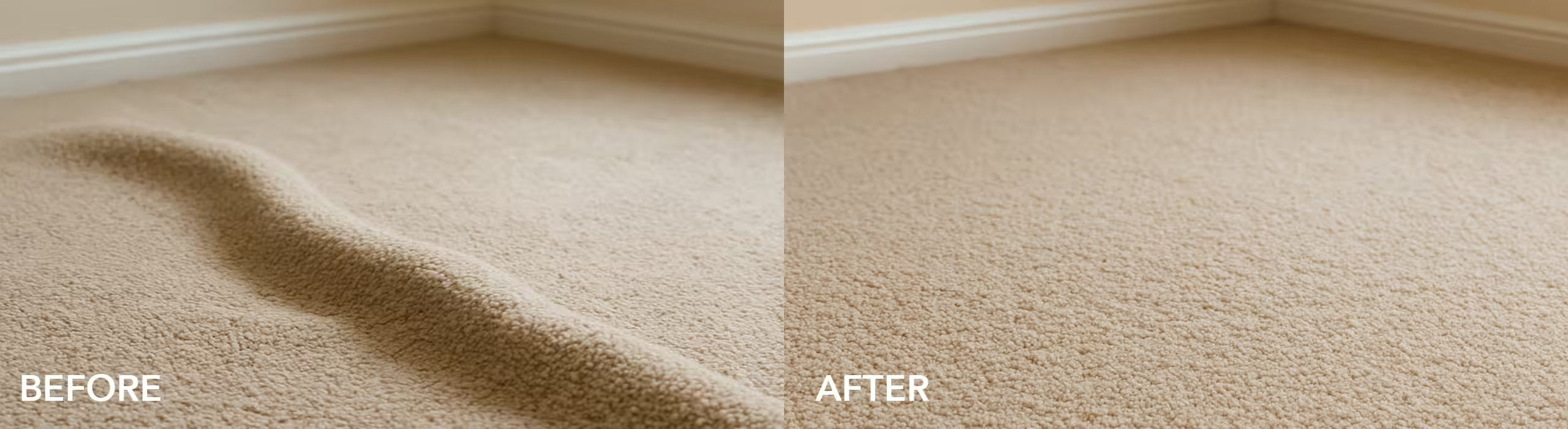
You walk into your living room and suddenly feel like you’re aboard a ship navigating choppy seas. But wait, you’re standing on solid ground. Those waves you’re seeing? They’re in your carpet, and they’re driving you absolutely crazy.
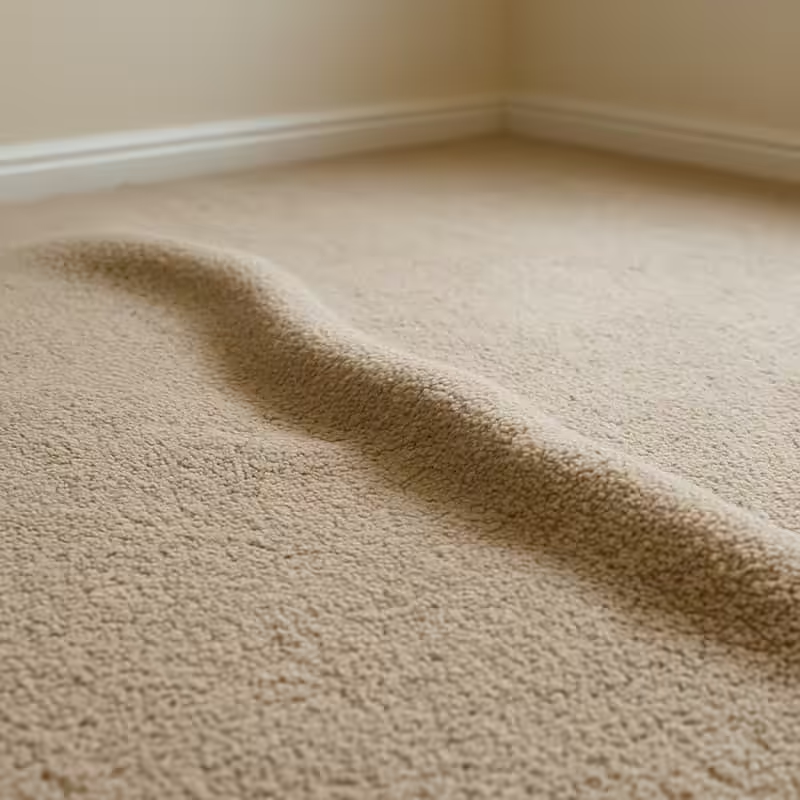
If your carpet resembles a mini mountain range complete with peaks, valleys, and mysterious bumps, you’re dealing with carpet buckling (also known as rippling, wrinkling, or “why does my floor look like bumpy?”).
Don’t panic. You’re not losing your mind, and your house isn’t sinking. Carpet buckling is incredibly common, surprisingly fixable, and we’re about to break down everything you need to know—including when to call in the pros and when you can tackle it yourself.
What Exactly IS Carpet Buckling?
Imagine your carpet as a fitted sheet that’s given up on life. Instead of lying flat and behaving like a proper floor covering, it’s decided to bunch up, ripple, and create those annoying bumps and waves that make you question your home-buying decisions.
Carpet buckling happens when your carpet loses tension and starts to move around like it owns the place. The technical term is “tension loss in the carpet backing.”
The 6 Usual Suspects Behind Carpet Chaos
1. Humidity: The Invisible Troublemaker
The Problem: High humidity is like that friend who shows up uninvited and refuses to leave. When moisture in the air penetrates your carpet fibers, they swell up like a sponge at a water park.
Why It Happens: Your carpet is basically a giant moisture absorber. In humid climates (we’re looking at you, Florida and coastal areas), carpets literally drink moisture from the air. Summer months are particularly brutal because of the dramatic change from dry winter conditions.
The Fix: Invest in a good dehumidifier and keep indoor humidity levels between 30-50%.
2. The Great Furniture Shuffle
The Problem: Dragging that heavy couch across the room seemed like a good idea until your carpet started looking like a crime scene.
Why It Happens: Heavy furniture acts like a bulldozer on your carpet fibers. When you drag instead of lift, you’re essentially giving your carpet an unwanted stretch session that it never signed up for.
The Fix: Always lift heavy items or use furniture sliders.
3. Installation Gone Wrong
The Problem: Your installer either skipped stretching day at the gym or thought “close enough” was good enough.
Why It Happens: Professional carpet installation requires power-stretching the carpet tight (about 1-1.5% in both directions) before securing it with tack strips. If installers use only knee kickers or don’t stretch properly, you’ll get slack that turns into ripples faster than you can say “warranty claim.”
The Reality Check: DIY installation with basic tools rarely provides enough tension.
4. The Padding Problem
The Problem: Your carpet pad is either too thick, too soft, or basically made of marshmallows.
Why It Happens: The Carpet & Rug Institute recommends residential pads no thicker than 7/16 inch. Anything thicker creates too much flex, like trying to walk on a trampoline. Eventually, all that bouncing loosens your carpet.
The Fix: Choose high-density padding that provides support without being too bouncy.
5. Water, Water Everywhere
The Problem: Your carpet got wet and decided to throw a tantrum while drying.
Why It Happens: Whether from flooding, spills, or overzealous steam cleaning, wet carpet backing swells and contracts unevenly as it dries. It’s like watching a time-lapse of Death Valley—lots of cracking and shifting.
The Prevention: Professional cleaning with proper drying techniques, or immediate action on spills and floods.
6. The Aging Process
The Problem: Time is undefeated, even against carpet.
Why It Happens: Years of foot traffic, normal wear, and environmental changes gradually cause fiber fatigue and tension loss. Even the best-installed carpet can develop ripples over time.
DIY Detective Work: Diagnosing Your Carpet Drama
Before calling in reinforcements, try to identify the culprit:
Recent cleaning or water damage? Moisture-related buckling usually appears within days of getting wet.
Just moved furniture? Check if ripples align with furniture paths—dead giveaway for drag damage.
Seasonal pattern? If buckling appears every summer and disappears in winter, humidity is your villain.
Near edges or center? Edge buckling often indicates installation issues, while center buckling might be padding or moisture problems.
Age of carpet? Carpets over 10 years old might just be showing their age.
The Fix-It Playbook
When You Can DIY:
Small ripples from humidity: Use a dehumidifier and be patient. Sometimes carpets self-correct when conditions improve.
Minor wrinkles from furniture: Try the “knee and pull” method—get on your knees and gently pull the carpet toward the wall while pressing down the ripple.
When to Call the Professionals:
Major buckling across large areas: This requires re-stretching with power tools you probably don’t own.
Installation-related issues: If your carpet was recently installed and is buckling, this might be a warranty issue.
Persistent moisture problems: Professional assessment can determine if there’s underlying moisture damage.
Multiple causes: When several factors are at play, professional diagnosis saves time and money.
Prevention: Because Nobody Has Time for Carpet Drama
- Control humidity with proper ventilation and dehumidifiers
- Lift, don’t drag heavy items across carpet
- Professional installation with power stretching
- Quality padding within CRI guidelines
- Prompt cleanup of spills and water damage
- Professional cleaning every 12-18 months
The Reality Check: When Carpet Replacement Makes Sense
Sometimes, carpet buckling is your floor’s way of saying “I’ve had enough.” If your carpet is:
- Over 15 years old
- Repeatedly buckling despite professional re-stretching
- Showing multiple signs of wear and damage
- Causing allergies or odor issues
It might be time to start shopping for new flooring. Think of it as a fresh start rather than a defeat.
Your Next Steps
Carpet buckling is annoying, but it’s rarely a disaster. Most cases can be resolved with the right approach:
- Identify the cause
- Try simple fixes for minor issues
- Call professionals for major buckling or complex problems
- Focus on prevention to avoid future waves in your carpet ocean
Remember: A properly installed and maintained carpet should lie flatter than a pancake and stay that way for years. If yours is doing the wave, it’s trying to tell you something—and now you know how to listen.