How to Repair & Protect Your Handmade Oriental Rug: Expert Advice from The Rug Gallery
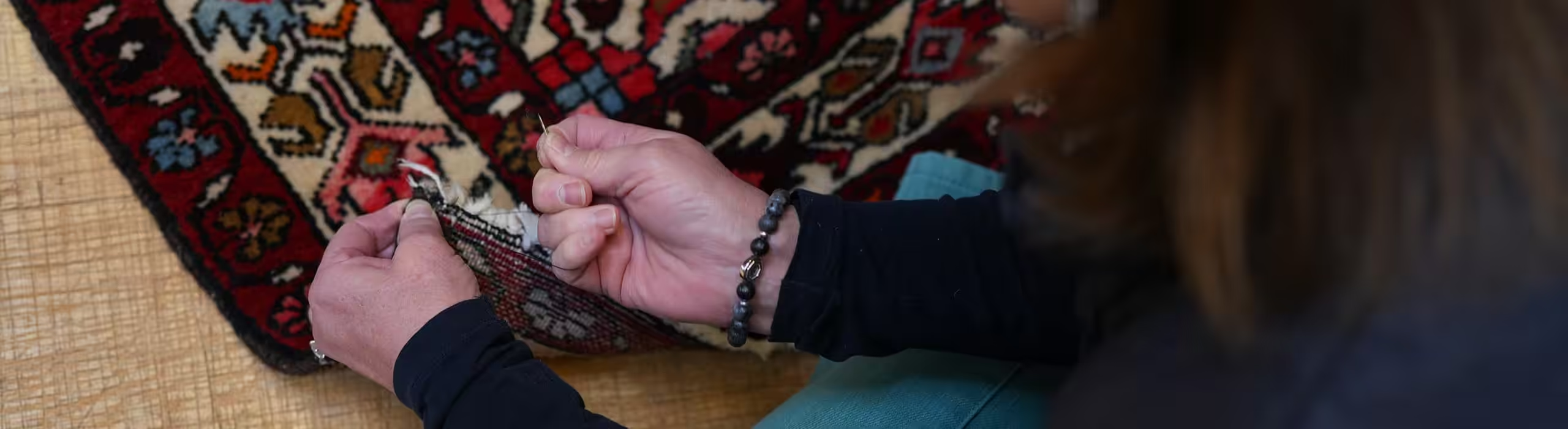
A handmade oriental rug is a piece of craft that can last generations with the right care. But between foot traffic, pets, moths, and well-meaning vacuuming mistakes, even the most carefully tended rugs eventually need attention.
We sat down with Jennifer Weaver, our in-house rug repair specialist at The Rug Gallery in Cincinnati, to get her honest take on the most common repair questions she hears — and what every rug owner should know before damage gets out of hand.

One of the first things Jennifer tells every customer who brings in a rug for repair: the finished result may not be seamless, and that’s not a failure — it’s just the nature of handmade work.
“When you’re talking about a handmade piece, the wool was dyed specifically for that rug,” she explains. “Finding an exact match is really almost impossible.”
Because the wool in a handmade oriental rug was dyed in a single custom batch, and often varies slightly in tone even within the same rug, any repair will involve sourcing the closest available match. The Rug Gallery is upfront about this with every customer before work begins. Knowing this going in helps set realistic expectations and lets you make a confident decision about whether to move forward.
This is one of the most common (and costly) mistakes rug owners make. If the fringe on your rug is fraying or looking worn, the instinct might be to just trim it off. Don’t.
The fringe on a handmade oriental rug is structural. It’s the exposed extension of the warp threads that form the rug’s entire foundation. Cut the fringe, and you’re cutting directly into the rug itself, which will cause pile loss along the edge that spreads over time.
If you don’t want fringe showing, the right move is to have it professionally finished, either tacked down or hand-cast so it’s hidden without compromising the rug’s integrity. Jennifer does this regularly and it’s one of the most straightforward repairs she offers.
Of all the things that can harm a handmade wool rug, moths are the most insidious because by the time you notice the damage, it’s often already significant.
Here’s how it works: an adult moth lays eggs in the wool, often in dark, undisturbed areas (under furniture, along walls, beneath the rug pad). When those eggs hatch, the larvae feed on the wool at the knot base, eating away pile from the foundation up. Because the eggs aren’t visible to the naked eye, most owners don’t realize there’s a problem until they see the larvae casings or notice the pile thinning.
If you catch it early and the larvae have only eaten the surface wool, Jennifer can often repair the damage by replacing the lost pile. But if the damage has reached the foundation threads, the rug may be beyond saving.
What you can do:
- Vacuum under and around furniture regularly — moths go where they won’t be disturbed
- Rotate your rug every 6 to 12 months so no area stays hidden for too long
- If you spot anything suspicious on the back of your rug, send photos to The Rug Gallery — we can assess the damage remotely and tell you whether it’s worth a repair
The short answer: it helps, but it’s not always required.
Professional cleaning before repair gives Jennifer the most accurate read on the rug’s true color, which matters a lot when she’s trying to source matching wool. A rug that’s been lived on for years may have built-up grime that shifts the apparent tone, meaning a wool match made on a dirty rug might look slightly off once the rug is cleaned.
That said, cleaning isn’t a hard requirement before every repair. If you’re bringing in a rug for fringe work or patching and a wool match isn’t part of the job, cleaning can happen on its own timeline.
If you’re already planning to repair, it’s worth asking whether a cleaning first would be helpful for your specific situation. The team at The Rug Gallery can walk you through the sequence that makes the most sense.
The honest reality is that any repair work will reduce the monetary value of a handmade rug. That’s not a reason to avoid repair, it just means the calculation is different when you’re dealing with a rug that’s been in the family for decades. The better question isn’t “what is this rug worth?” but “does this rug staying intact matter to the people who care about it?”
For rugs that are too far damaged to function as rugs at all, there are still options: usable sections of pile can be cut and repurposed as pillows, smaller accent pieces, or furniture coverings. Nothing is wasted if you’re willing to think creatively.
For handmade oriental rugs specifically, repair is almost always the more economical choice — assuming the damage isn’t catastrophic.
These rugs are expensive to replace. A quality handmade piece can run thousands of dollars, and a comparable new rug would likely cost far more than a repair. Jennifer’s advice: if the damage isn’t too extensive, invest in the repair.
One option she mentions for very significant structural damage is reweaving — a process where a specialist recreates the weft and warp threads and re-ties the original knots. It’s highly skilled work, expensive, and typically has to be shipped to a specialist. But for an irreplaceable piece, it can be the right call.
For most repairs — fringe, patching, edge work — the cost is considerably more accessible. Jennifer assesses each rug individually and provides a quote before any work begins.
Jennifer names traffic, pets, and vacuum cleaners as the three factors that cause the most day-to-day wear on handmade rugs. Here’s her guidance on each:
Traffic High-traffic zones wear pile down unevenly over time. The fix is simple but easy to forget: rotate your rug every 6 to 12 months. This distributes wear across the full surface instead of concentrating it in the paths people walk most.
Pets Pets that chew, scratch, or have accidents on rugs are among the hardest variables to manage. Jennifer’s straightforward advice: if you have a pet with destructive habits, the best protection is keeping them off the rug entirely. Once a handmade rug is chewed or heavily stained, the damage can be difficult and costly to reverse.
Vacuuming Vacuuming is important — it removes the dirt and debris that grinds down pile fibers and deters moths in undisturbed areas. But how you vacuum matters. Run the vacuum only along the pile direction, and never let the vacuum head run along the edges or across the fringe. The suction and beater bar can pull out the warp threads and accelerate fringe fraying. Vacuum under furniture too — that’s where moths hide.
After years of working on handmade rugs, Jennifer sees the same issues come up again and again. Here are the three repairs she performs most often:
Fringe Repair Fraying fringe is the most common reason rugs come in for service. The repair process involves evening out the fringe, removing loose or tangled wool, and then securing the edge with a hand stitch using waxed thread. It’s one of the more accessible repairs in terms of cost and turnaround.
Hand Surging The overcasting along the side edges of a rug, what Jennifer calls the surging, holds the pile in at the sides and prevents it from loosening through the edges. Traffic wears this down faster than most owners expect. On handmade rugs, Jennifer recommends hand surging over machine binding; both accomplish the same structural purpose, but hand surging preserves the authentic look of the piece.
Patching When a rug has a hole or a section of missing pile in the middle, patching is the solution. Jennifer maintains a workroom full of scrap rugs and salvaged material. She searches through her inventory to find the closest possible match in color, pile height, and weave, then hand-sews a patch into the affected area. The result won’t be invisible — but it restores function and slows further damage.
Ready to Have Your Rug Assessed?
Whether your rug has fringe that’s fraying, a suspicious thin spot, or damage you’re not sure how to categorize, don’t wait. The longer a repair issue goes unaddressed, the more it typically costs to fix.
bring photos of your rug (especially the back) to The Rug Gallery and we’ll take a look. We’ll let you know what’s going on, whether repair makes sense, and what it would cost.